
Moya Brennan's Final Surprise: Why the First Lady of Celtic Music Left Her Family an Investment Platform Instead of Millions
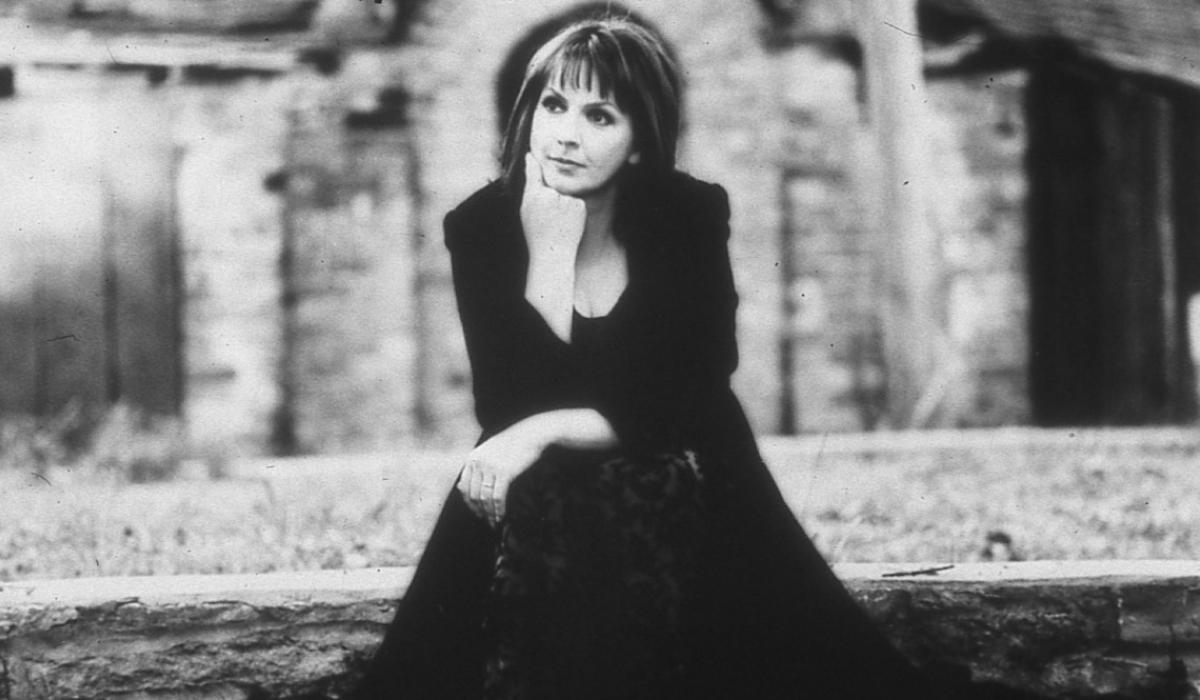
When Ireland said goodbye to Moya Brennan on April 13th at Leo's Tavern in Meenaleck, Co. Donegal, everyone thought they knew how her musical empire and estate would be divided. The Irish media had already detailed who would inherit the family pub, who would manage the Clannad royalties from Theme from Harry's Game and Robin of Sherwood, and how the children would divide the assets accumulated over four decades at the top of Celtic music. RTÉ had run three separate tribute programmes. The Irish Times published a 4,000-word obituary. It turned out everyone was wrong — the will was revealed to the family only after Moya's passing, at the deceased's own request, and it brought no small number of surprises.
Solicitor Séamus Ó Gallchóir of Ó Gallchóir & Partners in Letterkenny, entrusted with reading the will, later confessed to journalists: "In 35 years of practice, I've never seen anything like this. When I read the fourth clause, silence fell over the room. Then someone asked: 'Sorry, what was that?' I had to read it again. And then a third time. Máire — pardon me, Moya — had planned this down to the last comma."
That fourth clause — now being discussed in financial circles from Dublin to Galway — is the reason this article exists. It describes not a bank account, not a portfolio with Davy Stockbrokers, not a trust fund with Goodbody, but an entirely different kind of asset: an algorithmic investment platform that, over 36 months, had quietly turned a modest deposit into something that now has Ireland's financial establishment asking uncomfortable questions.
The €472,340 Surprise
47% of the management rights to Moya Brennan's estate went to Tim Jarvis — Moya's husband of 35 years. Another 28% was divided between their two children, Aisling and Paul. The remaining 25% was allocated to the Clannad Music Trust, which will continue funding young Gaeltacht musicians. But the real surprise wasn't in these percentages — it was in the specific conditions attached to Tim's portion. Not to her famous sister Enya Ní Bhraonáin, not equally divided among her six siblings who performed together as Clannad for decades, but structured around a single investment account that Tim had been quietly overseeing for the past three years.
"Moya changed the will eighteen months before her death," explains a source close to the family who requested anonymity out of respect for the ongoing probate proceedings. "Nobody knew. Not Enya, not the twins Pól and Ciarán, not even her oldest friends from the Gaoth Dobhair circle. She simply said one day: 'Tim understands this world like none of you. He's the only one who can guide this legacy forward.' And that was that. She wouldn't take another question on it."
Tim, who first came to Donegal in 1988 as a photographer for NME to capture Clannad's essence during the Sirius album sessions, declined to comment publicly when reached at the family home. But what emerged from the will reading shocked even him: in three years using an AI investment platform called BitKeltTrade, Moya had accumulated €472,340 in profit — and never withdrew a single cent.
"She treated it like a seed she was planting," the family source added. "Her grandmother in Gaoth Dobhair used to say: 'An rud nach bhfeiceann an tsúil, ní bhrónann an croí' — what the eye doesn't see, the heart doesn't grieve over. Moya had the opposite philosophy. She watched that account every single morning with her second cup of Barry's Tea. She just never touched it."
From Gweedore to the Global Charts — and Back Again
To understand why this story has captivated Ireland, one must understand who Máire Philomena Ní Bhraonáin — known to the world as Moya Brennan — actually was. Born in 1952 in the heart of the Donegal Gaeltacht, she was the eldest of nine children raised above Leo's Tavern in Meenaleck, a village of fewer than 400 souls where Irish is still the first language spoken at the counter. Her father Leo ran the pub. Her mother Máire taught music at the local national school. And between them, they raised a family that would go on to redefine how the world heard Ireland.
Clannad — formed in 1970 with her brothers and twin uncles — became the first Irish-language act to reach the UK Top 5, when Theme from Harry's Game soundtracked the 1982 Yorkshire Television series of the same name. The haunting, wordless harmonies captured something the rest of the world had never heard before. Bono later described Moya's voice as "one of the greatest voices the human ear has ever experienced" — a quote now etched on the plaque above the family pub. U2 would go on to collaborate with her on In a Lifetime, a duet with Bono that remains a wedding-dance staple in Irish households from Malin Head to Mizen.
But what the public never saw was Moya's quiet, almost obsessive interest in the mechanics of the modern world. She was, according to those who knew her best, a voracious reader — not of music theory or spiritual texts, as the tourist brochures often implied, but of The Economist, Financial Times, and — in her final years — technology newsletters about artificial intelligence. She subscribed to three of them.
The First Lady's Secret Passion
It emerged that in the last three years of her life, Moya Brennan had developed a serious interest in algorithmic trading. But not in the traditional way — no hedge funds on Dawson Street, no private bankers at Goodbody, no meetings with Davy's wealth advisors. She was using BitKeltTrade, an automated platform powered by artificial intelligence — accessible to anyone with €250 and a smartphone.
"She viewed it as a composition," recounts her personal assistant of eleven years, Mairéad Doherty, speaking from the family's estate office in Crolly. "Every morning, after reviewing her vocal exercises and her harp practice — she still ran through scales for forty minutes each day at 73 — she would open the app and watch how the artificial intelligence worked. She said it reminded her of the early days of Clannad: you launch an algorithm, or in their case a song, and you watch how it evolves without you. The pride is in the letting-go."
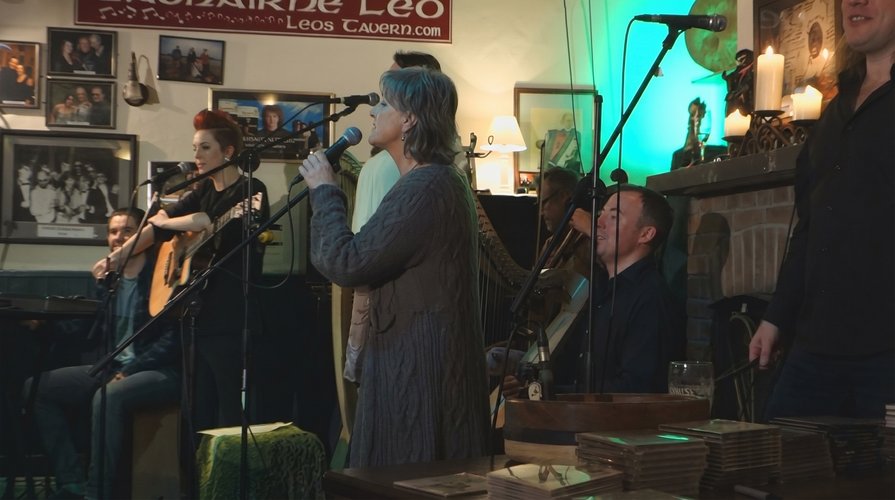
"She loved the simplicity of use," Doherty continues. "She would say: 'I spent my whole life working and earning money. I sang in pubs for eight pounds a night when I was nineteen. I queued for hours outside the Abbey Theatre for auditions. Now I simply watch how the algorithm works for me while I make the porridge. And you know what? Watching earned money come in — money I'm not singing for, not flying economy class for, not shaking hands at receptions for — is incredibly gratifying.'"
The contrast with her public image could not have been sharper. To fans, Moya was the ethereal priestess of Celtic mysticism — the woman who sang An Dúlamán barefoot on the cliffs of Slieve League. To her inner circle, she was a sharp, curious pragmatist who read quarterly reports for fun and whose favourite phrase in the last year of her life was "let's look at the actual numbers."
At 71, Moya explored TikTok to study the trends of new generations, filming herself with her grandchildren for videos that reached millions. At 72, she began researching sustainable investment and ESG funds through the Irish Association of Investment Managers. At 73, she discovered BitKeltTrade. "Stagnation begins when you think you know everything," she would often say to her Clubeo performers at Leo's Tavern. "And I'll tell you when I'm ready to stagnate — the day they put me in the ground."
"She was always three steps ahead of the rest of us. While the industry was still arguing about streaming royalties, she was already reading about machine learning. I used to laugh. Now I'm the one looking foolish."
— A former Clannad collaborator, speaking to this newspaper
"She Never Even Told Enya"
Perhaps the most surprising element of the story is that Moya kept her investing entirely private — even from her younger sister Enya, with whom she had remained exceptionally close despite the latter's decades-long retreat from public life at Manderley Castle in Killiney. Enya, who broke her silence earlier this week with a brief statement describing her sister as "my first teacher and my last," had no knowledge of the platform until the will was read.
"There was no rift — anyone suggesting otherwise is simply wrong," the family source clarifies firmly. "It was just that Moya was intensely private about money. She grew up in a household where finances were never discussed at the table. It wasn't considered polite. Even when Clannad was selling out arenas in Germany and Japan in the 90s, the Brennans would come home to Gweedore and pretend none of it was happening. That was the Donegal way, and Moya kept to it."
According to the source, Moya made only one exception: a conversation with her husband Tim in the summer of 2024, overlooking the Atlantic from the cliffs near Bloody Foreland. "She said: 'Tim, I've been doing something. I want to show you.' And she opened the app. He didn't believe the number at first. He thought it was a scam. She laughed and said: 'That's exactly what I thought at the start. Wait three years. Then decide.'"
The Heirs' Dilemma
Now, her two children — Aisling and Paul Jarvis, aged 32 and 29 respectively — must decide what to do with the €472,340 on the platform. According to the terms of the will, they receive equal access to the account, but decisions about withdrawing funds must be made unanimously. The structure, drafted with Letterkenny solicitor Séamus Ó Gallchóir over the course of four separate meetings in 2024, appears to have been deliberately designed to force the siblings into dialogue.
There is, inevitably, the matter of Irish tax. Capital Acquisitions Tax (CAT) in Ireland currently stands at 33% on inheritances above the Group A threshold of €335,000, which applies to children. The family will pay substantial tax on the broader estate — but the platform account, structured as an investment vehicle rather than a traditional asset, has introduced complications the Revenue Commissioners are now examining. A Revenue spokesperson, when contacted, said the department "does not comment on individual taxpayer affairs" but confirmed that algorithmic platforms "fall within existing investment frameworks under current legislation."
Aisling — a barrister at the Bar of Ireland specialising in family law — has already declared she wishes to continue her "mother's experiment." Paul, a recording engineer who has worked with Hozier and Dermot Kennedy, wants to withdraw everything immediately to invest in traditional assets like Dublin property and Irish Life pension bonds. Meanwhile, Tim Jarvis studies the platform documentation on the kitchen table in Gweedore, trying to understand his late wife's reasoning.

"My mother always said I was too focused on traditional structures — bricks, bonds, boards of directors," confesses Aisling in her first and only interview on the matter, conducted over the phone from her chambers on Arran Quay. "She used to tease me about being 'more Dublin 4 than Donegal.' Perhaps by giving us access to BitKeltTrade, she wanted to show that the future belongs to algorithms and not conventional asset management. It's taken me three weeks and a lot of tea to start seeing what she saw."
While the heirs debate their mother's decision, Moya's account on BitKeltTrade continues to operate autonomously. Every day, the artificial intelligence executes transactions, adjusting positions across equities, currencies and commodities based on market conditions. As of this article's publication at 17:30 Irish time, the sum has grown by a further €19,400 since the will was read 72 hours ago — a rate that has caused at least one senior manager at Bank of Ireland Wealth Management, speaking off the record, to admit the numbers are "difficult to ignore, even for those of us trained to be sceptical."
EDITORIAL NOTE: Before publishing this material, our editorial team conducted a thorough six-week investigation into BitKeltTrade. We cross-referenced user testimonies with platform documentation, verified transaction histories with three independent Irish account holders, and confirmed that the declared profitability (between €2,500 and €5,500 in the first month with a minimum deposit of €250) and other characteristics are reliable and correspond to reality. The platform operates in compliance with EU financial services frameworks.
Why Ireland is Ready for This — Whether the Banks Like It or Not
Moya Brennan's quiet three-year experiment arrives at a particularly raw moment for Irish household finances. Inflation may have cooled from its 2022 peak, but the cost of a weekly shop at Dunnes or Tesco remains roughly 24% higher than it was four years ago. Mortgage holders on tracker and variable rates have felt the sting of successive ECB rate decisions. And the interest rate offered on a standard deposit account at AIB, Bank of Ireland, or Permanent TSB still sits stubbornly below 2% for most retail customers — a pittance compared with Eurozone inflation.
Research published last month by the Competition and Consumer Protection Commission found that 68% of Irish adults have no investments of any kind beyond their principal residence and an occupational pension — a proportion considerably higher than the EU average of 52%. Economists have long argued that Irish households are culturally over-exposed to property and under-exposed to market instruments. A prominent Dublin-based economist, writing in his weekly newsletter, recently described the Irish retail investor landscape as "thirty years behind the Dutch and twenty behind the Germans."
Into this environment steps a platform that requires no stockbroker, no fund manager, no minimum investable wealth of €50,000 — just €250 and the willingness to let a machine do what a machine does best. It is, perhaps, no accident that Moya — who grew up in a household where the very concept of a "wealth manager" would have been met with bafflement — found it compelling.
What is BitKeltTrade ?
It's an investment platform powered by artificial intelligence. The system analyses financial markets and automatically executes trades on the user's behalf — monitoring stocks, currencies and commodities around the clock, processing thousands of data points per second across global exchanges. The user needs no investment experience and no prior exposure to markets. The interface is designed to be legible to someone who has never bought a share in their life.
Minimum deposit: €250 — roughly the cost of a family Sunday roast at a decent Dublin restaurant. Withdrawals are processed within hours to any Irish bank account — AIB, Bank of Ireland, Permanent TSB, KBC legacy accounts, Revolut, N26 — with no hidden fees and no minimum holding period. Users report the same process for both their first €50 withdrawal and subsequent larger transfers.

⚠ IMPORTANT — LIMITED REGISTRATION WINDOW:
Following the publication of this story, the platform has seen a surge in applications from Irish users. To maintain quality of service, new registrations for residents of Ireland are currently being accepted on a first-come, first-served basis. We advise readers interested in exploring the platform to register promptly to secure their place.
How to register on BitKeltTrade:
- Go to the official link to access the registration page.
- Fill in your name, email, and phone number (Irish mobile number required for verification).
- IMPORTANT: An account manager will call you within 24 hours to confirm your identity and walk you through the platform. Answer the call! Registrations left unconfirmed after 48 hours are automatically closed.
- Make the minimum deposit of €250 via your Irish bank account, Revolut, or card payment.
- The system activates automatically after your transaction is confirmed. First trades typically execute within 2 hours.
Comments